
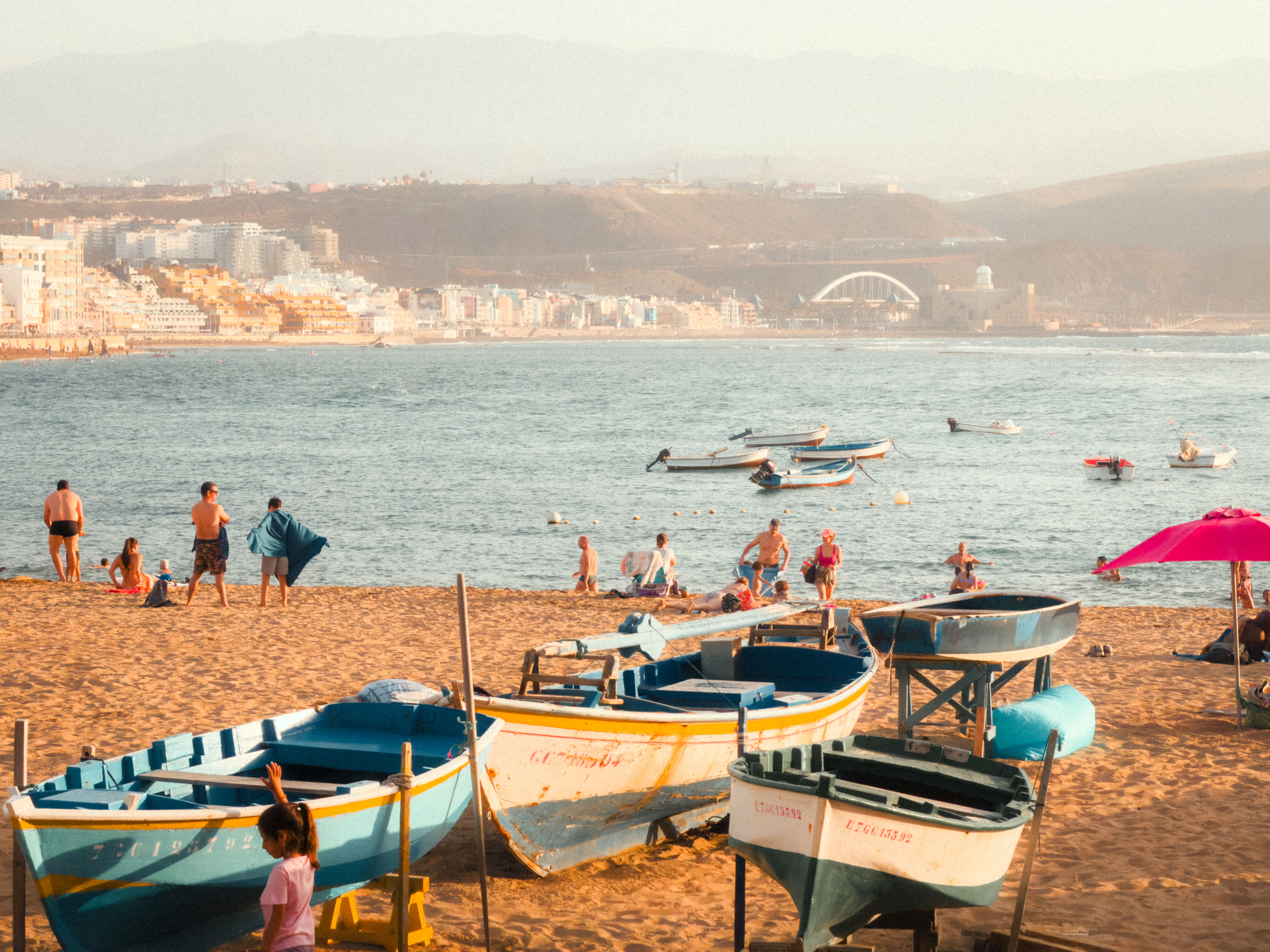
Two beaches a short drive apart can differ completely in how the water behaves, one flat as a lake and the other breaking hard. The difference is set by what the seabed and coastline do to wave energy.
Waves arrive as energy from far away
Most surf is generated by wind blowing over open water for long distances, and the resulting swell travels well beyond the weather that produced it.
The energy needs an unobstructed path to reach a shore. Anything that blocks, bends or absorbs it on the way reduces what finally arrives.
This is why a calm beach can sit under a windy sky. The local breeze is not what makes surf; the fetch across open ocean is.
Shelter comes from geometry
A beach inside a bay, behind a headland or on the lee side of an island receives only swell arriving from a narrow range of directions.
Swell that would otherwise hit it is intercepted by the landform, and what bends around the obstruction loses much of its height in the process.
Enclosed seas produce smaller waves for the same reason, since the distance wind can blow uninterrupted is limited by the coastline on the far side.
Reefs and bars dissipate energy offshore
A fringing reef or offshore sandbar forces waves to break before they reach the beach, and breaking is how a wave dumps most of its energy.
Inside the reef, what remains is a lagoon fed by reformed, much smaller waves, which is the classic flat turquoise water of many tropical resorts.
Seagrass meadows and kelp do a gentler version of the same thing, damping wave motion across a shallow shelf before it reaches shore.
Slope determines how a wave breaks
A steeply shelving beach lets swell arrive with its energy intact and break suddenly at the shore, producing a hard shorebreak in a narrow band.
A gently shelving beach makes waves feel the bottom far out and break progressively, spreading the same energy across a wide, shallow surf zone.
Slope also governs tidal range effects: on a shallow gradient, the water's edge can move a long way between tides, changing the beach hour by hour.
Calm water is not automatically safe water
Flat surface conditions can coexist with strong currents, particularly at reef passes and channel mouths where water drains back offshore.
Sheltered beaches also tend to have poorer natural flushing, so water quality after heavy rain can be worse than on an exposed shore.
Local flag systems and lifeguard advice reflect these conditions directly, and they are a better guide than the appearance of the surface.