
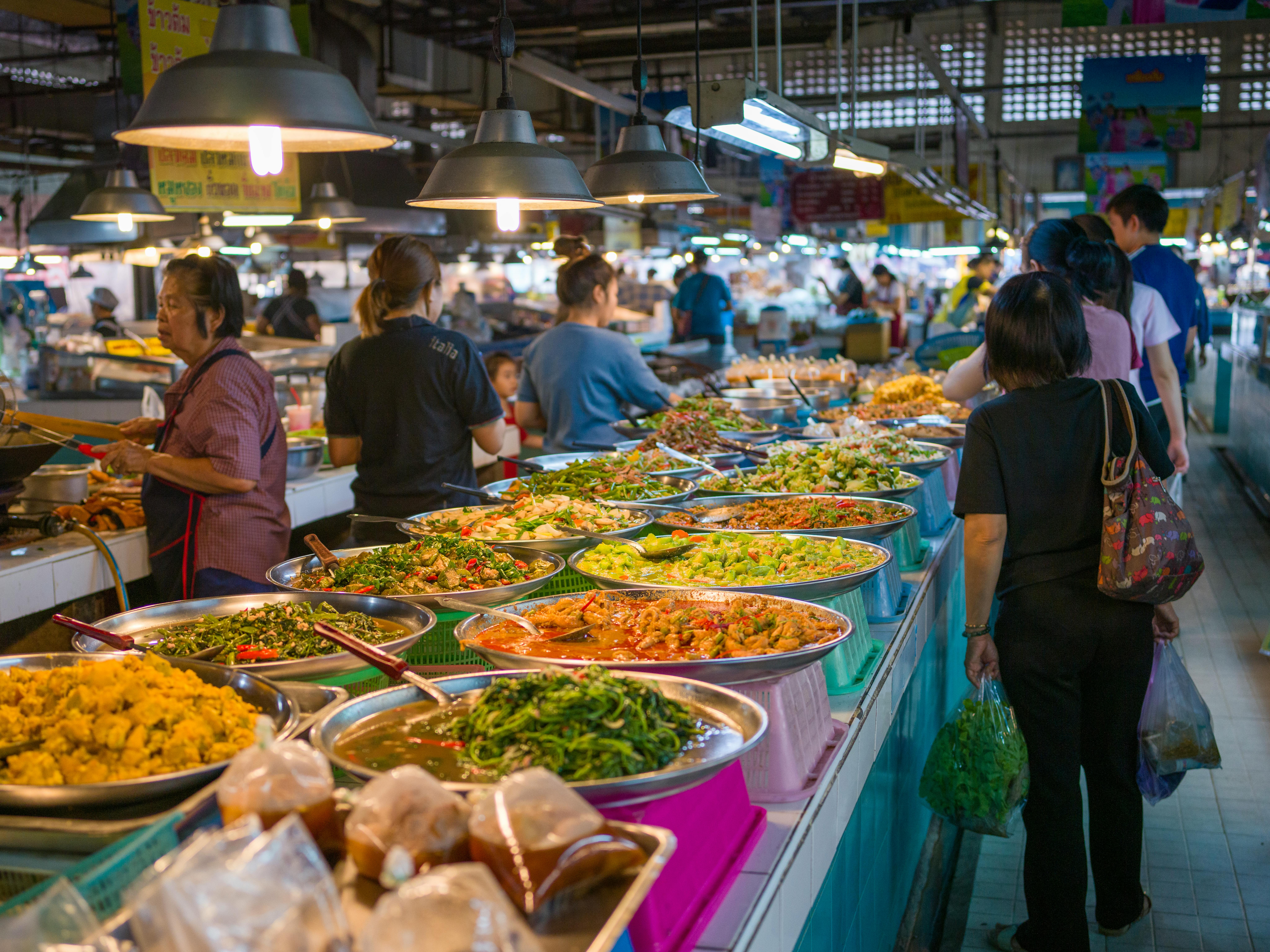
Restaurants clustered around a famous square tend to offer the same short list of dishes regardless of what the region is known for. The convergence is an economic outcome rather than a lack of imagination.
The customer will not return
A restaurant serving residents depends on people coming back, so its reputation compounds and quality is the asset it is building.
A restaurant on a heavily walked route serves each customer once. Reputation matters far less than conversion of the people passing the door in the next hour.
That inverts the incentive. Effort moves from the kitchen to the frontage, which is why these places have staff outside and laminated boards rather than a specialism.
Breadth reduces the risk of walking past
A group deciding where to eat will reject anywhere that does not suit everyone, so a menu covering pizza, pasta, salad and grilled meat loses fewer groups.
Each addition widens appeal slightly and costs the kitchen depth, since a small brigade cannot execute forty dishes to the standard it could execute twelve.
The result is a menu that is long, photographed and hedged, optimised for being chosen rather than for being eaten.
Supply chains reinforce the sameness
A broad menu with unpredictable demand cannot be run on fresh daily buying, so much of it arrives prepared and frozen from a food service distributor.
Neighbouring restaurants buy from the same few distributors, so the dishes are literally the same product finished in different kitchens.
This is stable and low-waste, which is why it survives, and it is also why the food tastes identical three doors apart.
Rent selects for it
Premium footfall locations carry rents that require high turnover, and high turnover requires fast service and predictable covers.
An ambitious kitchen with a short menu and long cooking times cannot generate the covers those rents demand, so it locates elsewhere.
The selection happens over years, until only the formats that fit the rent remain on the square.
Finding the alternative nearby
The gradient is steep. Two or three streets back from a main sight, rents fall, the customer base becomes local, and menus shorten sharply.
A short menu, a handwritten or daily-changing board, and a dining room busy with people who are not carrying bags are the reliable signals.
Eating at the local hour rather than the visitor hour also helps, since kitchens serving residents are at their best when residents are there.